
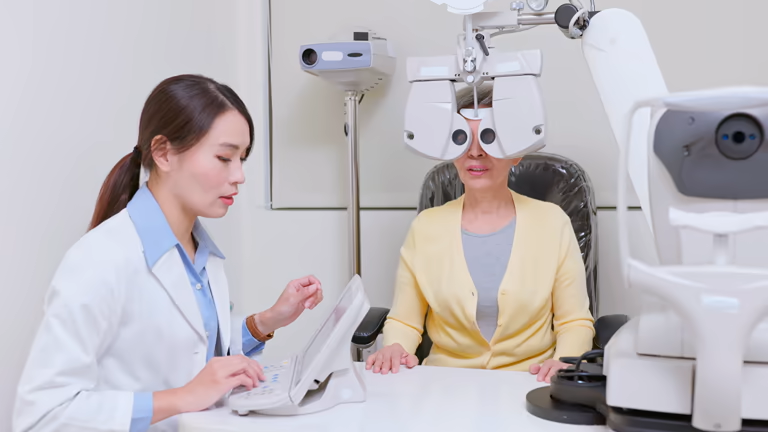
Choosing an eye care facility is not a decision to make on convenience alone. Your vision is closely tied to your quality of life, safety, and productivity, so the clinic you select should demonstrate a consistent standard of medical excellence, reliable service, and ethical patient care. With many centers offering overlapping services, it can be difficult to distinguish true clinical capability from attractive marketing.
This guide focuses on practical, evidence-based indicators you can use right now to evaluate nearby options. From the credentials behind the care to the technology used in diagnosis and treatment, each section helps you narrow your choices with confidence and clarity.
Look for Comprehensive Services and Clear Specialization
A strong eye care facility typically provides a broad range of services while being transparent about its strengths. Routine vision checks, pediatric eye care, contact lens fittings, cataract evaluation, glaucoma management, diabetic eye screening, and emergency care indicate the clinic can handle both everyday needs and long-term eye health. Facilities that coordinate care across multiple sub-specialties often reduce delays in diagnosis and unnecessary referrals.
At the same time, breadth should not come at the expense of clarity. The best centers explain which conditions they treat in-house, which procedures they perform frequently, and what is referred out. When you call or visit, notice whether the staff can describe services precisely, including what happens before and after a procedure, and whether they can guide you to the right clinician without confusion.
Verify Surgeon Credentials and Procedure Experience
If you may need surgical or advanced medical care, verifying the experience of the treating doctor is essential. Look for board certification where applicable, formal fellowship training in areas like cornea, retina, glaucoma, or pediatric ophthalmology, and a track record of handling complex cases. A reputable facility will not be defensive about these questions and should be able to share the clinician’s background, typical case volume, and the types of outcomes they monitor.
Be cautious of clinics that rely heavily on vague promises rather than measurable competence. If you are comparing locations while traveling or supporting family elsewhere, the same rule applies; for instance, someone searching online for cataract surgery Vadodara should still evaluate credentials, case experience, and follow-up protocols rather than selecting based on proximity or price alone. Surgical skill matters, but so does the surrounding clinical system that supports safe care.
Assess Diagnostic Technology and Clinical Hygiene Standards
High-quality eye care depends on precise measurements, and modern diagnostics can significantly improve detection and monitoring. Reliable facilities commonly use tools such as optical coherence tomography for retinal and optic nerve assessment, corneal topography for mapping the cornea, automated visual field testing for glaucoma, and accurate biometry for surgical planning. What matters most is not only having equipment, but also using it appropriately and explaining what the results mean for your specific case.
Equally important are cleanliness and infection-control practices. Pay attention to the condition of waiting areas, testing rooms, and restrooms, as well as how staff handle equipment that touches patients. The best clinics maintain a professional environment, sanitize devices between uses, follow clear protocols, and communicate these practices without being prompted, especially when procedures involve contact with the eye or surrounding tissues.
Evaluate Communication Style and Patient Education
Excellent clinical care can be undermined by poor communication. The best eye care facilities make complex information understandable without oversimplifying it. During consultations, you should feel that the clinician is listening, asking relevant questions, and tailoring recommendations to your symptoms, lifestyle, and medical history. A rushed appointment is not automatically a sign of low quality, but dismissive answers or unclear explanations are strong warning signs.
Patient education should be a visible part of the experience. You should receive clear guidance on medication use, warning symptoms that need urgent attention, realistic recovery timelines, and how follow-up is handled. A clinic that provides written instructions, encourages questions, and explains alternatives—including the benefits and trade-offs of each option—typically reflects a patient-centered culture and stronger clinical accountability, especially when the goal is changing the way seniors live through better vision and quality care.
Review Appointment Access, Follow-Up, and Continuity of Care
Access is a practical measure of quality because eye problems can change quickly. Look at how easy it is to get an appointment, whether urgent cases are triaged responsibly, and how the facility supports after-hours concerns. A dependable clinic generally has a clear policy for emergency symptoms, post-procedure questions, and medication issues, so you are not left guessing when something feels wrong.

Continuity of care is equally important, especially for chronic conditions such as glaucoma, dry eye disease, macular degeneration, or diabetic retinopathy. Ask whether the same doctor will monitor your progress over time, how test results are tracked, and whether changes in treatment are documented and explained. Strong follow-up systems often include structured recall schedules, consistent testing intervals, and proactive reminders that help prevent avoidable vision loss.
Consider Reputation, Transparency, and Ethical Practices
Reputation is useful when you interpret it carefully. Online reviews can highlight patterns in waiting time, staff behavior, billing clarity, and communication, but they should not be treated as the only metric. Focus on consistent themes across many reviews rather than isolated comments, and consider whether feedback mentions long-term outcomes, post-treatment support, and clarity of explanations. Word-of-mouth from primary care physicians, endocrinologists, or pharmacists can also offer grounded insight.
Transparency is a hallmark of ethical care. The best facilities explain estimated costs, what insurance may cover, and what additional tests might be recommended. They also avoid pressuring patients into quick decisions, particularly for elective procedures. A trustworthy clinic welcomes second opinions, provides copies of reports when requested, and communicates risks and expected outcomes in a balanced way.
Compare Comfort, Accessibility, and the Overall Patient Experience
The patient experience is not merely cosmetic; it affects adherence to treatment and follow-up. Consider whether the facility is accessible for your needs, including parking, public transit access, wheelchair-friendly entry, and reasonable waiting arrangements. If you are accompanying an elderly parent or a child, factors like calm staff interactions and clear signage can reduce stress and improve cooperation during tests.
Comfort should also include operational efficiency and respect for your time. A well-run clinic typically manages patient flow without confusion, verifies prescriptions carefully, and coordinates testing so you are not moved repeatedly without explanation. When the environment feels organized, privacy is respected, and staff are attentive, it often reflects a disciplined clinical culture that supports safer, more consistent care.
Conclusion
Identifying the best eye care facility in your area is easiest when you evaluate it the way clinicians evaluate health: by looking for reliable signals, not surface impressions. Comprehensive services, verifiable credentials, modern diagnostics, strong hygiene, and clear communication create the foundation for safe and effective care. Practical factors such as appointment access, follow-up systems, and continuity further separate dependable providers from those that only appear convenient.
Ultimately, the right choice is the facility that combines clinical skill with ethical transparency and a patient-centered approach. When you use these indicators to compare options, you are far more likely to find care that protects your vision not just for today’s concern, but for the years ahead.
 Rahul Smith