
When organizations experiment with AI/ML, they often start small—testing models with limited datasets or within one department. While these initial experiments are useful, the true impact of AI/ML only unfolds when these models are scaled. Scalability allows companies to handle larger data volumes, integrate advanced algorithms, and apply insights across the entire business ecosystem.
Driving Innovation Across Healthcare
Healthcare is one of the industries most transformed by scalable AI/ML models. From predicting patient outcomes to streamlining diagnostics, these models enable medical professionals to make better decisions faster. For example, AI-powered image recognition can analyze thousands of medical scans in minutes, reducing the time required for early disease detection.
This is why many businesses are choosing to develop scalable AI/ML models with Techmicra. With scalable models, organizations can ensure that their AI/ML solutions not only perform well today but continue delivering value as their data, operations, and customer base grow exponentially.
Revolutionizing Retail and Customer Experience
In the retail sector, customer experience is everything. Scalable AI/ML models are helping businesses analyze consumer behavior, predict buying trends, and personalize recommendations. Think of an e-commerce platform suggesting products you didn’t know you needed but ended up purchasing—that’s machine learning at work.
When applied on a larger scale, these personalized experiences can drive significant revenue growth. By scaling up AI/ML models, retail brands can understand millions of customer interactions simultaneously, ensuring that each shopper feels valued and understood.
Transforming Finance with Smarter Decisions
Financial institutions deal with massive amounts of data every day—transactions, credit scores, investments, and fraud detection signals. Scalable AI/ML models help banks and financial services companies turn this data into actionable insights. For instance, AI algorithms can flag suspicious transactions in real-time, reducing fraud risks dramatically.
Scaling these models means such protections and insights are not just available for a subset of clients but can cover millions of users. It also enables institutions to offer personalized financial products, making services more customer-focused and secure.
Optimizing Supply Chains and Logistics
The supply chain is another area where scalability plays a critical role. AI/ML models can predict demand, optimize delivery routes, and improve inventory management. Initially, these models may focus on a single warehouse or a specific product line. However, when scaled, they can synchronize entire global supply chains, saving costs and reducing inefficiencies.
For logistics companies, scalable AI/ML solutions mean fewer delays, lower transportation costs, and better customer satisfaction. The scalability factor ensures that whether managing 100 deliveries or 100,000, the system adapts smoothly.

Enabling Smarter Manufacturing
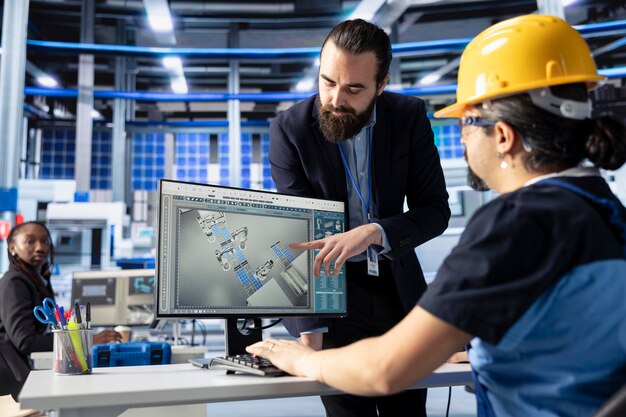
Manufacturers are using AI/ML to move toward predictive maintenance and smart factories. Machines equipped with sensors generate enormous amounts of data, which AI models analyze to predict failures before they happen. Scalable models allow this predictive capability to be applied across multiple plants and regions, minimizing downtime and maximizing output.
By scaling AI/ML models, manufacturers don’t just solve problems reactively—they create a culture of continuous improvement where data drives efficiency at every level.
The Future of Scalable AI/ML
As more industries adopt AI/ML, scalability will be the defining factor separating short-lived experiments from long-term transformation. Scalable models ensure that businesses can keep up with rising data volumes, customer demands, and technological advancements.
The future promises even greater integration of AI/ML into daily operations—think autonomous vehicles, hyper-personalized digital marketing, and AI-driven sustainability solutions. The key will always be scalability: starting small, proving results, and then expanding rapidly to meet evolving needs.
Conclusion
Scalable AI/ML models are no longer optional—they are essential for businesses that want to innovate, compete, and grow. They transform healthcare, finance, retail, logistics, and manufacturing by making smarter decisions possible on a larger scale.
By choosing to develop scalable AI/ML models with Techmicra, organizations can bridge the gap between experimentation and full-scale transformation. The result? Faster innovation, better customer experiences, and long-term business growth driven by intelligent, adaptable systems.
 Krishna